



When Renée Field was diagnosed with Parkinson’s disease, she was determined not to let it define her. Instead, her resilience — and the unwavering care and devotion of those who refused to see her as anything less than whole — carried her through.
A former schoolteacher with a deep love for children, music and learning, Renée was diagnosed with Parkinson’s at age 70 and lived with the disease for 18 years. For her husband of nearly 64 years, Burt Field, and their three children, the news marked the beginning of a long, uncertain journey. The care they received at Rush University Medical Center inspired a legacy of philanthropy that continues today.
“She was surprised and obviously concerned when she was first diagnosed in 2007,” Burt said. “At that time, we really didn’t know very much about Parkinson’s. Nobody could tell you exactly what was going to happen or how it would progress. You just knew that it was serious.”
Finding answers and a sense of trust
Like many families searching for answers, the Fields turned to research, recommendations and lived experience. An online search and guidance from loved ones led them to Rush, where Renée became a patient of two neurologists who were then with Rush: Kathleen Shannon, MD, and Christopher Goetz, MD. The family found not only clinical expertise but also a sense of trust that endured for years.
“That’s what made Rush stand out,” Burt said. “From the very beginning, we felt comfortable there.”
From the outset, Renée’s care at Rush was defined by consistency and compassion. Her care team focused on managing symptoms carefully and adjusting treatment as the disease evolved, helping Renée maintain independence for as long as possible.
That same commitment extends beyond the clinic. Rush’s Parkinson’s Disease and Movement Disorders Program pairs compassionate care with groundbreaking translational research, turning discoveries into new therapies and clinical trials that offer patients more options and hope for the future.
“They were always trying to do the right thing for her,” Burt said. “They took the time to explain what was happening and what the options were. Renée trusted them, and when you’re dealing with something like Parkinson’s, that trust is everything.”
Years of living fully
For the first decade after her diagnosis, the care Renée received allowed her to continue living the life she loved. Medication helped with early symptoms, allowing her to travel with her husband extensively — sometimes with a walker, but always with determination and optimism.
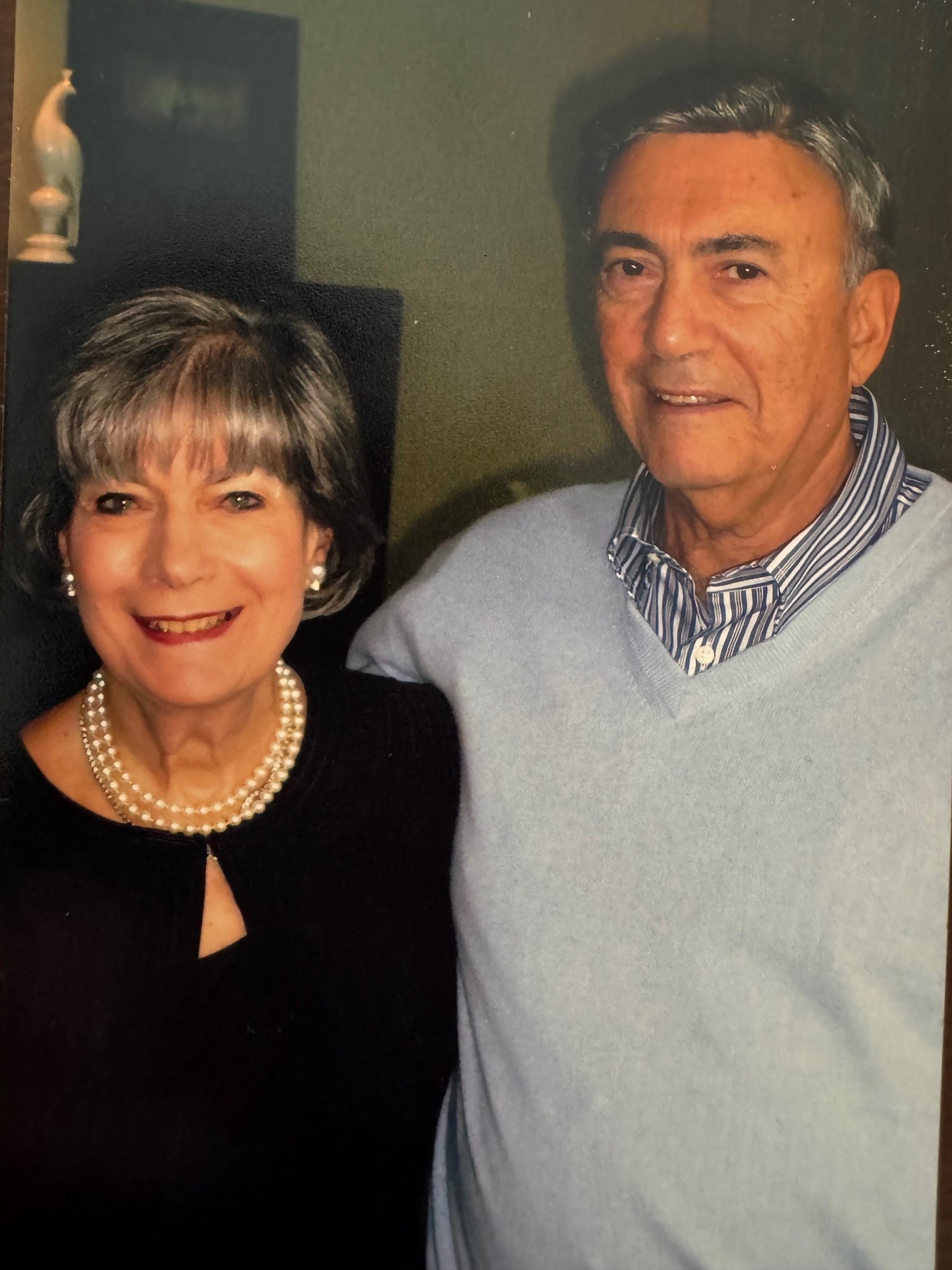 “Those were good years,” Burt said. “We were very lucky to have that time together, and we didn’t take that for granted.”
As Parkinson’s progressed, so did the challenges, with a separate spinal condition compounding Renée’s physical limitations. She eventually gave up driving, then walking independently, and later relied on a wheelchair. In the final years, Parkinson’s affected her voice, making communication increasingly difficult.
“That was probably the hardest part for me,” Burt said. “Because I have hearing difficulties myself, it became extremely hard for us to communicate. I never expected that part, and it was very frustrating and very painful.”
Through it all, though, Renée moved forward with grace.
“She was really a trouper,” Burt said. “The disease never affected her mind or her attitude. She accepted what was happening and kept going.”
Renée’s daughter, Gail Smoler, remembers a mother whose illness never diminished her kindness or her commitment to family. Even late in her illness, Renée found joy in nurturing her family and other relationships.
“She was a wonderful mother, a wonderful wife, a wonderful grandmother and a wonderful friend,” Gail said. “She took pride in keeping the family connected. That was really important to her, and it made a profound impact on who we are as a family today.”
That unity proved essential during the most complicated years, when 24-hour care became necessary. Though emotionally challenging, the family approached caregiving together, supported by devoted aides who became part of their extended family.
“Giving over to that way of life was definitely an adjustment,” Gail said. “But we were incredibly blessed. We had wonderful people helping us, and that made a huge difference.”
Why Rush stands out
For the Field family, the care Renée received at Rush went beyond medicine; it honored her humanity.
“The staff were always very nice and very accommodating,” Burt said. “They genuinely cared about her and about us. You could feel that they were doing everything they possibly could to help.”
That trust extended beyond Renée’s Parkinson’s care. Burt, a lifelong Chicagoan, had personal ties to the institution dating back decades, including his own knee replacement at Rush and childhood memories of accompanying his mother there for cancer treatments.
“I’ve known this hospital for a very long time,” Burt said. “If anybody is going to find solutions to this horrible disease, I believe it will be Rush.”
A commitment to giving back
That belief has fueled more than a decade of giving. Since 2008, the Field family has supported the Rush Parkinson’s Disease and Movement Disorders Program, directing gifts toward innovative research aimed at improving quality of life and, ultimately, finding a cure.
“We wanted to leave funds in Renée’s name as a way to honor her and to help others,” Burt said. “The hope has always been that someday, through research, a cure for Parkinson’s can be found so that other families don’t have to go through what we did.”
Their generosity inspired others to do the same. Following Renée’s passing in April 2025, more than 50 memorial gifts were made in her honor to support Parkinson’s research and care at Rush.
“She would have wanted to personally thank every single person who made a gift,” Gail said. “She would have been incredibly appreciative to know how much support there was and how much she was loved.”
The outpouring of support reflected not only the impact Renée had on others but the values she instilled in her family — generosity, patience and compassion.
A lasting legacy of hope
Today, the Field family views their philanthropy as a continuation of Renée’s spirit, helping strangers just as she would have wanted.
In October, they established two philanthropic funds to honor her memory: one supporting the most promising Parkinson’s disease research and an endowment to support research in perpetuity.
“We hope this is a lasting legacy,” Burt said. “That the funds raised will help other families in similar situations and, someday, help bring about a cure.”
For families facing Parkinson’s, the Fields hope their story underscores the importance of staying connected and hopeful.
“Patience and kindness are so important,” Gail said. “This disease changes every day, and every family member experiences it differently. You have to be compassionate with each other.”
Burt agrees.
“It’s tough, but you have to keep going,” he said. “You do the best you can, and you hope that someday things will be better.” As Rush researchers pursue innovative approaches to Parkinson’s care and research, the Field family remains focused on one goal: “Find a cure,” Burt said. “That’s what this is all about.”


