

Colon and rectal conditions can have a significant effect on your health and quality of life. The good news is that many of these conditions are treatable or manageable with colorectal surgery, commonly called colon and rectal surgery.
Our team has advanced training and expertise in even the most complex, difficult-to-treat colorectal conditions.
We specialize in:
- Surgery for colon cancer and rectal cancer
- Minimally invasive approaches that help protect healthy tissue and preserve your continence
What Is Colorectal Surgery?
Colorectal surgery refers to a wide range of treatments and procedures for conditions that affect your colon, rectum and anus.
Our colorectal surgeons specialize in the latest treatments and technologies to treat the full range of colorectal conditions.
You may need colorectal surgery if you have:
- Colon cancer
- Rectal cancer
- Crohn’s disease
- Ulcerative colitis
- Diverticulitis
- Hemorrhoids
- Anal fissure
- Anal fistula
- Pilonidal disease
- Other colon, rectal and anal conditions
Minimally invasive colorectal surgery
Whenever possible, Rush colorectal surgeons offer minimally invasive colorectal surgeries. These approaches allow our team to perform complex surgeries, while sparing healthy tissue. This is particularly crucial to help avoid colorectal surgery side effects like incontinence.
Our colorectal surgeons offer laparoscopy or robotic surgery. These minimally invasive techniques use small incisions to perform complex procedures, offering many benefits, including:
- Shorter hospital stays
- Quicker recovery and return to normal activity
- Less pain
- Fewer side effects
The Rush Approach to Colorectal Surgery
At Rush, we know that there is no one-size-fits-all approach to treating colorectal conditions. That’s why our colorectal surgeons partner with a multidisciplinary team of specialists to determine the right treatment for your specific needs.
While your colorectal surgeon will be your primary doctor for surgery, they’ll also coordinate with other Rush providers, including:
- Oncologists
- Gastroenterologists
- Wound care specialists
- Radiologists
- Pathologists
Our goals are to cure your condition, when possible, and improve your quality of life. We’ll work with you to get you back to your routine quickly.
Your treatment will focus on:
- Addressing and easing your symptoms
- Treating and often curing your condition
- Improving your quality of life
Focus on your quality of life
Colorectal conditions and colorectal surgery can affect your quality of life. That’s why we provide supportive care to help you get back to everyday life with confidence and independence.
Before, during and after your colorectal surgery, you’ll have access to:
- Wound and stoma care if you need a temporary or permanent colostomy or ileostomy after surgery.
- Nutritional counseling from registered dietitians who specialize in colorectal surgery.
- Pelvic floor therapy to strengthen your pelvic muscles after surgery and improve continence and overall function.
- Psychosocial support to help you cope with the emotional challenges and lifestyle changes before and after surgery.
 Meet our colon and rectal surgery services providers
- Anal fissure is a painful tear or crack in the skin around the anus that can cause bleeding and discomfort during bowel movements. Your colorectal surgeon can typically diagnose an anal fissure through a physical exam.
- Colon cancer forms in your large intestine and typically causes symptoms like changes in bowel habits and abdominal pain. Colonoscopy is the gold standard for diagnosing colon cancer.
- Crohn's disease is an inflammatory bowel disease (IBD) that causes chronic inflammation in your digestive tract. This leads to pain, diarrhea and a wide range of other digestive symptoms. Colonoscopy is often the most effective way to diagnose IBD.
- Diverticulosis and diverticulitis are conditions that cause small pouches to form in your colon and get inflamed. Your doctor will use imaging tests such as a CT scan or colonoscopy to identify and evaluate the pouches in the colon.
- Fecal incontinence is the inability to control your bowel movements. Your doctor may conduct a physical exam and recommend tests like imaging or manometry to evaluate your muscle function.
- Rectal cancer begins in the rectum and often causes symptoms like bleeding, pain and changes in bowel habits. Like colon cancer, your colorectal surgeon will use a colonoscopy to diagnose rectal cancer.
- Ulcerative colitis is an inflammatory bowel disease (IBD) that causes ulcers in the colon. It typically includes symptoms like diarrhea, pain and other gastrointestinal problems. Like Crohn’s disease, colonoscopy is typically the best way to diagnose ulcerative colitis.
Colorectal surgery treatments
Rush offers the full range of both surgical and nonsurgical colorectal procedures. Your doctor will work with you to determine the right treatment for you based on:
- Your condition
- The severity of your condition and symptoms
- Your personal preferences
Colorectal surgery options at Rush
- Colon surgery (bowel resection): This is a common surgery to remove a section of your bowel. It is major surgery used to treat colon cancer, rectal cancer, diverticulitis, Crohn’s disease or ulcerative colitis. Our colorectal surgeons can perform colon surgery laparoscopically or through open surgery depending on your condition.
- Hyperthermic intraperitoneal chemotherapy (HIPEC): Your colorectal surgeon will work with a surgical oncologist to perform this procedure for hard-to-treat GI cancers. During the procedure, your surgeons will deliver heated chemotherapy directly into your abdomen after they remove your tumor.
- Ileostomy: An ileostomy diverts waste through an opening in the abdomen when your intestines aren’t functioning properly. This treatment is often needed for Crohn’s disease, ulcerative colitis or colon cancer. During the surgery, your colorectal surgeon will connect your small intestine to a surgically created opening called a stoma.
- Sacral nerve stimulation for fecal incontinence: During this procedure, your surgeon will implant a small device that uses mild electrical impulses to help control bowel movements. This device works by stimulating the nerves that regulate your rectum and sphincter muscles.
- Pilonidal sinus: In addition to traditional surgical approaches, our pediatric and colorectal surgeons are studying a minimally invasive laser treatment for pilonidal sinus. Early research suggests this outpatient procedure may offer shorter recovery time and less discomfort compared to standard surgery.
Nonsurgical colorectal surgery procedures at Rush
- Botulinum toxin injections (Botox): Colorectal surgeons use Botox to treat chronic anal fissures, pelvic floor dysfunction and rectal spasms. This minimally invasive treatment can help improve bowel function while alleviating symptoms for several months.
- Colonoscopy: Your colorectal surgeon can perform a colonoscopy to detect colon cancer, rectal cancer, Crohn’s disease, ulcerative colitis, polyps or other digestive conditions.
- Polyp removal: Your colorectal surgeon can remove polyps to prevent colon cancer and rectal cancer. During your colonoscopy they can safely remove these precancerous growths.
Second Opinion Services for Colorectal Surgery
Our colorectal surgeons also offer second opinion services if you’re facing colon cancer, rectal cancer or other colorectal conditions.
At your second opinion appointment, they’ll review your diagnosis and test results with you. They’ll then explain your treatment options at Rush, which could include:
- Medical interventions such as medications and monitoring
- Colorectal surgery options
- Clinical trials that may be available for your specific case
Why Choose Rush for Colorectal Surgery
- Protecting your bowel function: One of the most serious side effects of treating colorectal conditions is interfering with your ability to control your bowels. Rush colorectal surgeons are committed to procedures and approaches that protect your continence. For example, we offer sphincter-sparing surgery for treating Crohn's disease, colon cancer or rectal cancer. This approach allows us to safely treat your condition, while preserving vital muscles that control your bowels.
- See a colorectal surgeon quickly: When you have a colorectal condition, we know that it’s important to see a specialist quickly. That’s why we aim to get you in as soon as possible. We offer colorectal care across the region, including Chicago, Aurora, Oak Park and several other convenient Chicago-area locations.
- Expertise in complex, recurrent anorectal conditions: If you’ve been struggling with rare, recurrent or complicated colon, rectal or anal conditions, we can help. Our colorectal surgeons have specialized training and years of experience treating difficult-to-treat conditions, including hemorrhoids, anal fistula, chronic anal fissure and pilonidal disease
- Nationally ranked colon cancer and rectal cancer care: Rush’s colorectal surgeons partner with other specialists to treat people who have colon cancer. They offer the most advanced colorectal surgery to treat colon cancer with compassion and expertise. This approach is just one reason U.S. News & World Report recognized Rush University Medical Center and Rush Copley Medical Center as high performing for colon cancer surgery.
- Faster recovery after surgery: Colorectal surgery recovery varies depending on the procedure you have. Regardless of what surgery you’re having, you’ll benefit from our enhanced recovery after surgery (ERAS) protocol. Your colorectal surgery care team will guide you in specific steps to take before and after your surgery to help you return home quickly and safely.
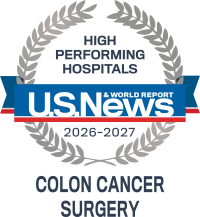
U.S. News & World Report rated Rush University Medical Center as high performing for colon cancer surgery.