



When veterans walk through the doors of A Safe Haven Foundation, many are carrying the heavy weight of housing insecurity, uncertain futures and the lingering impacts of military service. After A Safe Haven Foundation lost grant funding for its veteran suicide prevention programming, the Road Home Program: The National Center of Excellence for Veterans and Their Families at Rush and Rush University student volunteers stepped in to fill the gap — offering not only resources but also connection, care and a renewed sense of community.
A Safe Haven Foundation, or ASHF, is a Chicago-area nonprofit that provides housing, support services and career pathways for individuals in crisis. Its Veterans RISE program, which stands for resources, information, services and empowerment, is where the Road Home Program steps in with added support. Together, they’re making sure veterans don’t just survive but begin to thrive again.
A personal mission
For Dee Garcia, a volunteer at ASHF and veteran who previously received care at the Road Home Program herself, this work is deeply personal.
“Every day is a struggle for these vets — housing, employment and the uncertainty of what comes next,” Garcia said. “I wanted our programming to feel less like another lecture and more like a chance to breathe. A space where they could laugh and feel seen.”
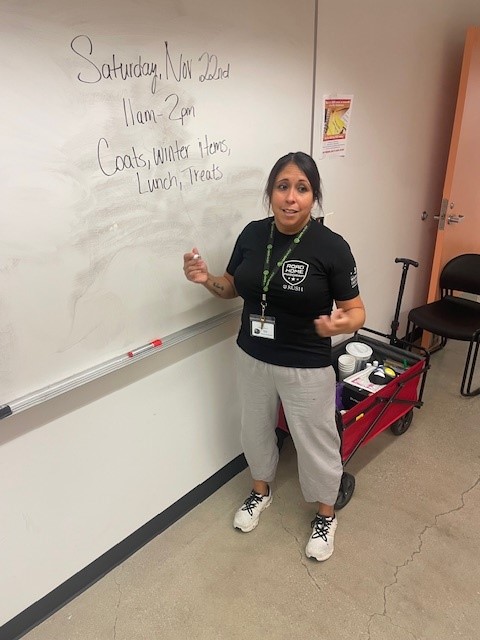
That spirit of care shows up in every detail Garcia coordinates, from choosing meals the residents of ASHF’s veteran housing truly enjoy to organizing movie nights, game nights or educational sessions led by Rush University students through the Rush Community Service Initiatives Program, or RCSIP. Students, faculty and staff who take part in this program use their talents to engage in community‐based volunteer experiences that both address local needs and strengthen their ability to work with diverse populations.
At ASHF, medical students lead group events and workshops, develop relationships with veterans and support programs aligned with Rush’s community health priorities.
For second-year medical students Praewpailin Rich and Toni Zheleva, who co-lead the partnership between the Road Home Program and RCSIP, the opportunity to connect with veterans has been transformative.
“When we learned that A Safe Haven had lost its funding, we felt we could step in to continue providing support in small but meaningful ways,” Rich said. “Seeing how engaged and appreciative the veterans are reminds me of the power of human connection and how just a few hours a week can help someone feel heard and uplifted.”
Zheleva agrees.
“Our goal was to fill a gap by creating consistent, engaging programming that helps veterans feel supported, valued and connected,” she said. “Many have told us they look forward to our visits — that energy and sense of belonging make all the difference.”
Through workshops on emotional awareness, suicide prevention and resilience, students help create space for meaningful conversations — conversations that can save lives. At the same time, Garcia makes sure there’s always room for lighter moments, because joy and community are powerful medicine, too.
“Those moments help break down walls,” Garcia said. “Little by little, you see veterans start to relax and open up. That’s where healing begins.”
The power of partnership
According to Brian Klassen, PhD, director of strategic partnerships at the Road Home Program, the collaboration grew out of a shared mission to serve veterans holistically. National studies show that veterans without housing are at significantly higher risk for mental health challenges and suicide, underscoring the need for integrated care.
“Road Home was already addressing mental health needs, but we understand that we can’t begin to address trauma if someone is worried about their next meal or a warm place to sleep,” Dr. Klassen said. “That’s where A Safe Haven comes in. I think that’s what makes this so unique. Rather than one organization trying to do everything, each partner focuses on what it does best. And that’s how we make the biggest impact.”
The collaboration allows each organization to play to its strengths: ASHF provides housing and case management, while the Road Home Program contributes clinical expertise, mental health education and volunteers from across Rush.
By combining clinical expertise with community-based support, the Road Home Program extends its mission beyond therapy rooms, meeting veterans where they are and strengthening the foundation for long-term healing.
“We can’t just wait for people to come into our clinics,” Dr. Klassen said. “Sometimes, we have to go to them. We have to show up consistently, listen and remind them why they matter.”
Healing through connection
The impact is already clear. Garcia recalls one veteran who relied on gas cards provided by the Road Home Program to attend job interviews. That support helped him land steady work as an extra on local television productions like “Chicago Fire” and “Chicago Med.” Others, once withdrawn and isolated, now show up to community meals, share stories and even return to volunteer after leaving the program.
“These opportunities to connect with kind people and engage in recreational programs are powerful ways to decrease loneliness and improve mental health,” Garcia said. “Even something as simple as an Italian beef sandwich shared with friends can make someone feel cared for.”
Though still in its early stages, Dr. Klassen said the collaboration is already helping both veterans and students grow.
“Our medical students learn to build rapport with people who may have had very different life experiences,” he said. “They’re learning cultural competence with military populations — a skill that’s often overlooked but essential in health care.”
Clinicians nationwide often aren’t formally trained in understanding military culture or its impact on health and identity.
“A veteran might sit across from a provider who doesn’t know what their branch of service means, what deployment was like or how their experiences shape the care they need,” Dr. Klassen said. “This partnership gives students a chance to close that gap — to meet veterans as people first, to listen and to learn. Veterans deserve care that supports the whole person.”
Rich said that experience has already shaped how she’ll approach her future work as a clinician.
“Working with veterans has shown me that healing often begins with being seen and heard, not just treated,” she said.
Zheleva agrees, adding that it has reinforced her commitment to trauma-informed care.
“Through creating space for veterans to connect during challenging times, I’ve seen how community can be profoundly restorative — how coming together in compassion and shared humanity can offer strength, even amid hardship,” she said. “It’s a truth I’ll carry with me as I move forward in my medical career.”
Looking ahead
As the work evolves, support helps to provide better winter coats, boots, transportation cards and upgraded living spaces for veterans at ASHF. Dr. Klassen hopes that as the program continues to mature, it can serve as a model for similar initiatives across the country.
“There are shelters in every city that serve veterans,” he said. “With the right collaboration, this kind of community-based, culturally informed support could be replicated anywhere.”
The initiative continues to thrive through the dedication of volunteers — from Rush students and staff to community members who give their time and compassion. Together, they provide meals, lead activities and create meaningful connections with veterans at ASHF.
Volunteers coordinate with staff at both organizations and complete ASHF’s onboarding process to ensure the experience is supportive and respectful for everyone involved.
For Garcia, the most rewarding part is simple: the smiles, fist bumps and hugs from veterans who know they’re not alone.
“I used to not even be a hugger,” she said. “But when someone says, ‘Thanks for the blanket,’ or just smiles after a good meal, that’s enough reward for me.”
Through the partnership of Rush’s Road Home Program, ASHF and volunteers who give their time and compassion, Chicago-area veterans are reminded of something powerful: Home isn’t just a place. It’s the people who care for you along the way.


