



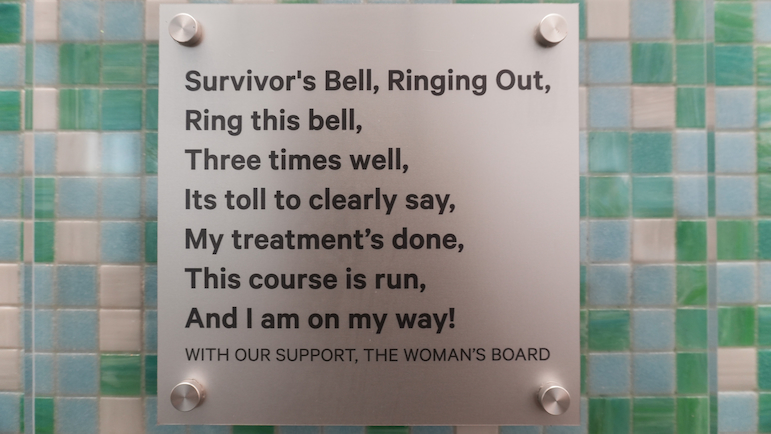
A rite of passage. A dreamt-of end. A new beginning. A cherished ritual for patients, loved ones and care teams alike at RUSH MD Anderson Cancer Center. Countless individuals ring the survivor’s bells in the Joan and Paul Rubschlager Building, one of which was made possible by The Woman’s Board of Rush University Medical Center, to celebrate the completion of their treatment. The act serves as a powerful reminder of our shared humanity, strength, resilience and connection.
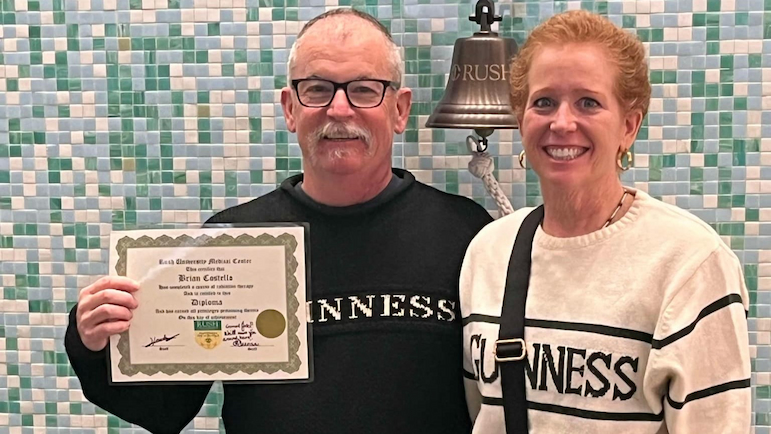
“I’m currently the Pipe Major of the Shannon Rovers Irish Pipe Band. When I was diagnosed with tonsil cancer, we weren’t sure if I’d be able to play pipes during treatment. With a little bit of discomfort, though, I could. After 15 rounds of radiation, I informed my band I was going in for treatment and I was going to play for the people in the waiting room. Every one of my bandmates joined me. Nine treatments later, I rang the bell! My wife, Katy, who was going through treatment for breast cancer at the same time, rang her bell a month earlier. It was overwhelming. Knowing our four kids have their parents means so much to me, since I lost my mom to cancer in my 30s. I look forward to bringing joy to more people at Rush through my pipes for as long as I’m able.”
—Brian Costello, RUSH MD Anderson Cancer Center Patient
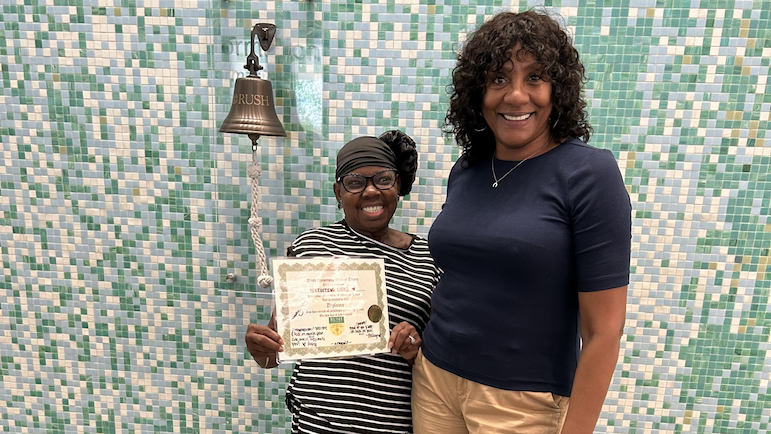
“Ringing the bell meant I had completed all my treatments and could finally get back to my life from before I was diagnosed. That day, I had my sons, my nieces and my husband with me. I know it must have meant a lot to my nieces to be there. They work at Rush and would come down and sit with me and encourage me while I was going through treatment.”
—Hertestine Cooks, RUSH MD Anderson Cancer Center Patient
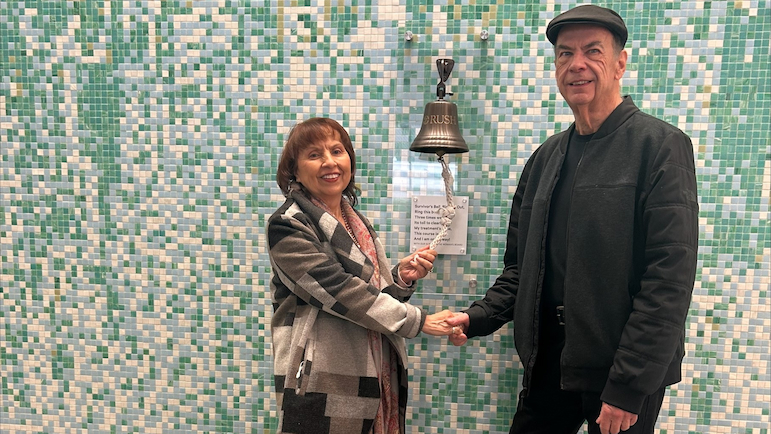
“I went through external beam radiation therapy for six weeks to minimize any form of residual tumor material left after I had non-cancerous meningioma surgery six years ago. Ringing the bell highlighted a relief: I was done. Completing my course of radiation therapy gave me the confidence to continue my regular activities — and then some. I babysit my grandkids, who are 3 and 1 year old, two and a half days per week. I also go to Zumba classes five to six days per week.”
—Alicia Wieder, RUSH MD Anderson Cancer Center Patient
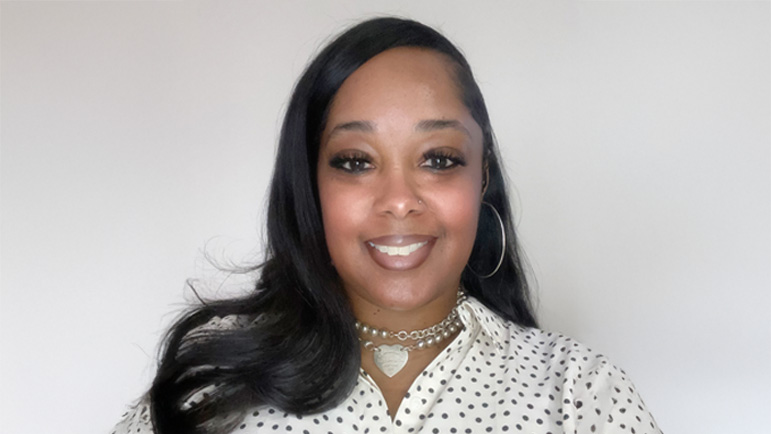
“Seeing patients ring the bell after completing radiation is deeply emotional and powerful. It symbolizes so much more than just the end of a medical regimen; it’s a declaration that they made it through a difficult time in their lives. It’s a shared triumph. When that bell rings, it echoes through the hearts of fellow patients, families, staff, doctors and nurses. It can be a beacon of hope for people still undergoing treatment. It marks a new beginning — hopefully one that brings healing, peace and a return to life beyond cancer.”
—Nicole Harris, Clinical Coordinator, Radiation Therapy
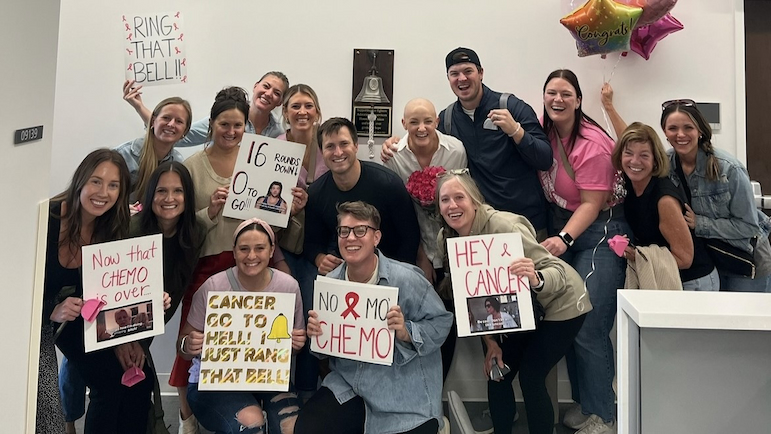
“During my cancer treatment, I wrote a lot of letters to my 1-year-old daughter. I also decided that I wanted to film my entire last day of chemotherapy, including ringing the bell. I had dreamt about ringing the bell almost every day throughout treatment. My hope is that one day, after I’m gone, she will read my letters and watch this video when she needs inspiration or guidance navigating a difficult time in her life. Thank you, Rush, for creating the space for cancer patients to have this unforgettable moment. Its impact on my family will last a lifetime.”
—Lauren Webber, RUSH MD Anderson Cancer Center Patient
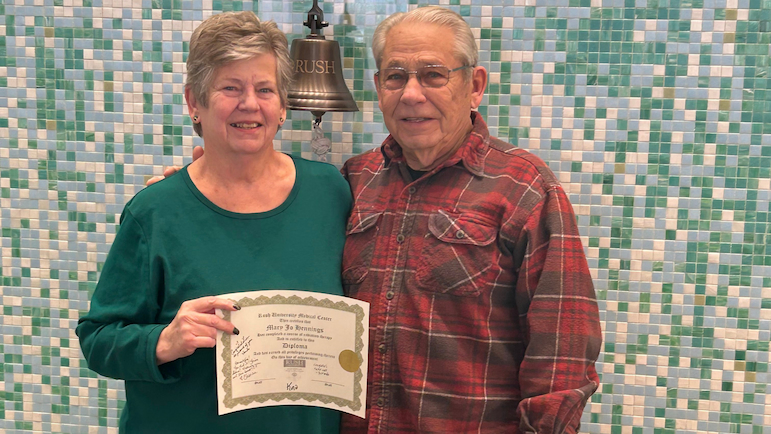
“I love that there is a bell right there in the waiting area on the first floor. Everyone sees your joy, your hope. Everyone celebrates with you. Whenever I heard the bell ringing, I’d always go out and say something to the person ringing it. When it was my turn to ring the bell, I felt like my prayers had been answered. It was the start of the finish. To give patients that opportunity to feel joy and excitement after a long journey — it’s hard to put into words.”
—Mary J. Hennings, RUSH MD Anderson Cancer Center Patient
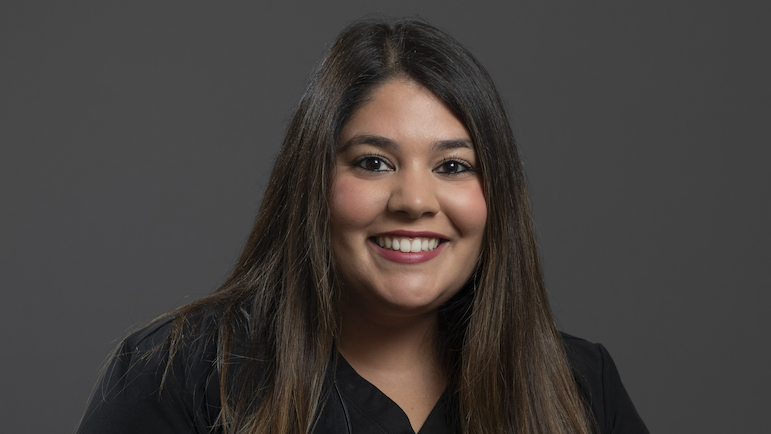
“One of the first questions I am always asked is, ‘Do you guys have a bell? I can't wait to ring the bell when I am done.’ It serves as motivation. People often think that working in oncology is so sad and depressing, but when we see our patients ring that bell and can celebrate this momentous occasion with them, it is the most rewarding experience. It’s one of the many reasons why I love this job so much.”
—Maryam Lopez, DNP, AGNP-C, OCN, Hematology/Oncology Infusion RN 2
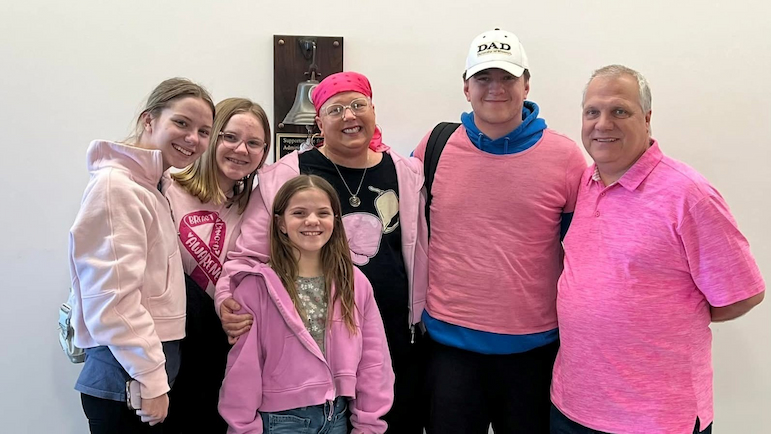
“The day I rang the bell, I was overwhelmed with gratitude — for my family and friends who carried me through, for my medical team and the best nurses in the entire world who saved my life multiple times. As much as I was grateful to be done with chemo, the huge lump in my throat and hot tears flowing were also because I knew I wouldn’t see ‘my people’ each week. My care team cared about me as a person, not just a patient. I’m just so grateful.”
—Julie Lechelt, RUSH MD Anderson Cancer Center Patient
“There are so many emotions that play in our head when someone rings the bell. Of course, we feel joy for the patient because they have finished treatment. It’s also bittersweet. We are incredibly happy for those who are able to ring the bell, but these moments also give us pause. They remind us to give extra love and support to those who may not be able to ring the bell because of lifelong treatment and to remember to honor those who did not make it to the bell ringing.”
—Anna Hardy, BSN, RN, MPH, Hematology/Oncology Infusion RN

“Going through cancer treatment can be hard. And to get to ring that bell after everything you went through — all the good days and bad ones — is a big accomplishment. The bell ringing is a celebration. It’s joy. One part of the journey is done, out of the way. People bring so many family members and friends to be a part of it. Even other patients join. They support each other. When someone rings the bell, they’re cheering them on, too. It’s an incredible celebration.”
—Eunice Reed, Patient Experience Specialist II
* All philanthropic gifts benefit initiatives of RUSH MD Anderson Cancer Center in the greater Chicago area and Northwest Indiana and do not fund research or programs at The University of Texas MD Anderson Cancer Center in Houston.


