



At a time when social services are under mounting strain and health care systems are being asked to do more with less, social workers are often the force behind some of the most meaningful moments in patient care, ensuring that no one is left behind.
At Rush, few people have shaped that work more than Robyn Golden, MA, LCSW, associate vice president of social work and community health. Golden is a national leader in the field, recognized for her success in redefining the role of social workers in health care.
“Robyn embodies the very best of what it means to serve a community,” said David Ansell, MD, MPH, senior vice president for community health equity at Rush University Medical Center. “She has championed innovative models of health care that bring humanity, dignity and equity to every patient encounter, transforming what social work means in a health care system. This endowed fund is a testament to her vision and the lives she has helped change. Honoring her work now ensures that the impact she has made continues for generations.”
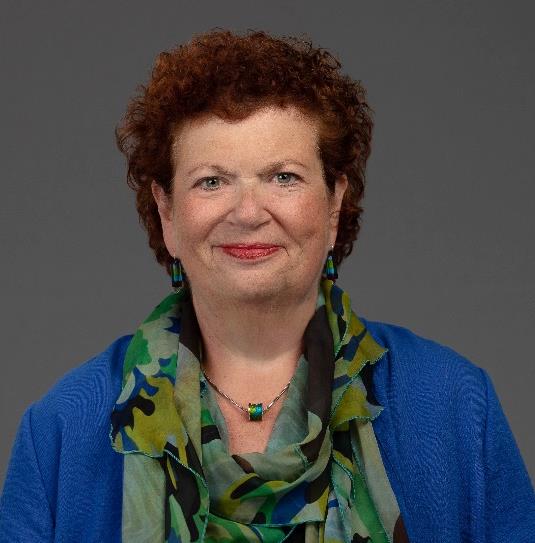
A new endowed fund honors Golden’s leadership and commitment. Established through a generous philanthropic gift from Rachel Kohler, the Robyn L. Golden Fund for Social Work and Community Health is the first endowed fund for social work in Rush’s history — and one of the few anywhere. Kohler has previously supported Golden’s work, helping turn Rush’s vision for the Legacy Mental Health Fellowship into reality by providing social workers from backgrounds historically underrepresented in health care with training and supervision in mental health treatment.
The permanent fund will strengthen and sustain Rush’s efforts in clinical innovation, education and training, applied research, and policy and advocacy. These are areas where social workers are uniquely positioned to improve health outcomes and advance equity.
By supporting social work and community health programs across Rush, the fund will help stabilize critical social work services, grow a more diverse workforce and expand models of care that address the social drivers of health, all with a targeted focus on addressing the Chicago area’s most pressing needs.
“Robyn and her team have been leaders in advancing both policy and practice across many areas like care coordination, social care and care alignment, especially for vulnerable populations,” Kohler said. “This approach, often backed up by rigorous evaluations, allows the social work field to be better understood, funded and institutionalized into health care. The fund should help sustain and extend her important work to drive even more benefit to our communities of patients, caregivers and care providers.”
A turning point for social care
In recent years, fluctuations in federal support have created growing uncertainty for community-based services, even as demand continues to rise.
“Right now, more than ever, we need social care services,” Golden said. “Our communities are being hit hard, and Rachel’s investment reinforces how essential it is to serve those who need our care the most.”
Unlike many clinical interventions, social care is not consistently reimbursed, despite strong evidence linking it to better health outcomes. Health care payment models remain largely episodic and procedure-driven, often leaving prevention, care coordination and community-based support underfunded.
Income from the endowment will offer stability to existing programs while giving Golden and her team the flexibility to remain nimbly responsive as needs evolve. By helping bridge funding gaps, the team will be better equipped to sustain programs that address the everyday realities that shape patients’ health and modify them as needed.
At Rush, social determinants of health screenings help identify patient needs related to housing, food access, transportation, employment, caregiving responsibilities, social isolation and more. When those needs surface, social workers and community health workers partner together, combining clinical expertise with community-based engagement.
Together, they help patients navigate complex systems that can otherwise feel overwhelming.
“It’s really about giving hope to people who do not have a voice,” Golden said. “The work we do gives folks the feeling that they are not a lost cause. If you stick with us, we can help you get to a better place.”
Patients often tell Golden and her team that they didn’t realize a hospital would care about whether they had food on the table, family caregiving support or stable housing. That recognition — that someone is listening and advocating for them — can be transformative.
Advancing equity through integration
Golden’s work has long centered on embedding social care into health care delivery, not as an add-on, but as an essential component of whole-person care.
Social workers, she said, play an essential role in advancing justice and fairness within the health system, bringing nuance and ethics to decisions that might otherwise be viewed through a purely medical or financial lens. One example is developing a more diverse workforce, which can strengthen trust and community engagement, and ultimately lead to improved health outcomes.
“Social work skills are critical for understanding what someone is going through, but also for advocating for that person,” Golden said. “For too long, we’ve had people serving folks they can’t quite relate to. People want to see someone who can understand what they’re going through.”
This allows social workers to ensure that health decisions reflect the full context of a patient’s life.
Equipped with this knowledge, Golden and her team have helped build programs across Rush, including those focused on aging, homelessness and family caregiving, chronic disease management, and mental health. Her team is also supporting social work-led services at the new Sankofa Wellness Village on Chicago’s West Side. Each of these programs will be able to grow and evolve in perpetuity thanks to the endowed fund.
A legacy rooted in people
Endowed gifts are among the most impactful donations Rush can receive. Each gift to the endowment provides Rush with a steady and predictable source of income that can be used as a resource for innovation and growth. It’s a permanent source of funding that others can contribute to and grow for years to come.
For Golden, the endowment represents something far greater than personal recognition — it honors the extraordinary work of her colleagues and affirms the essential role social workers play in ensuring every person receives the comprehensive, compassionate care and support they deserve.
“To have something named after you in your lifetime is an unfathomable honor,” Golden said. “It’s beyond words. But it’s really a testament to the Social Work and Community Health staff. They’re the ones who get up every morning committed to improving people’s lives. I hope other institutions hear about this and think, ‘We want to have a social work-focused endowment, too.’”


