
Rush provides advanced spinal tumor treatment in Chicago and the surrounding area for patients with tumors affecting the spine and spinal cord. We provide both primary and metastatic spinal tumor treatment. Our multidisciplinary spine tumor specialists create personalized care plans designed to relieve pain, protect neurologic function and restore mobility.
The Rush Approach to Spine Tumor Care
Rush experts treat complex spine tumors with advanced, personalized care.
Spine tumors can cause back pain, mobility issues and impair bladder function. At Rush, our ultimate goals are to remove the tumor, relieve pain and restore your ability to move around.
We treat benign and cancerous tumors that begin in the spine, and cancers that begin elsewhere and spread to the spine.
Rush offers innovative treatment options for spine tumors, including minimally invasive surgery and image-guided radiation therapy. Your treatment options will depend on the type of tumor you have, your overall health, lifestyle and goals. Our experts will work together to develop a personalized treatment plan for you.
Our team of spine tumor experts includes spine tumor surgeons, neuro-oncologists, medical oncologists, radiation oncologists and more. Our nationally recognized experts can provide second opinion services to help you understand your diagnosis and treatment options.
Spine Tumor Signs and Symptoms
Spinal tumors can form anywhere along your spine but are most common in your middle and lower back.
Symptoms of spine tumors include:
- Back pain that gets worse over time
- Pain radiating to your hips, legs, feet or arms
- Numbness or tingling in your legs, arms or chest
- Muscle weakness
- Loss of bladder control
- Difficulty walking
Types of Spine Tumors
There are many different types of spine tumors. Tumors that start in the spine, called primary spine tumors, are rare. Most spine tumors are metastatic, meaning they start somewhere else in the body and spread.
Benign spine tumors: Many types of noncancerous tumors can grow in the spine. These tumors do not spread but can cause pain and other symptoms. Benign tumor types include meningiomas, nerve sheath tumors (schwannomas and neurofibromas), ependymomas, osteoblastoma, osteochondroma and osteoid osteoma.
Primary spine tumors: Malignant, or aggressive, spine tumors, can grow quickly. Types of primary spine cancer include chordoma, chondrosarcoma, sarcoma and giant cell tumor.
Metastatic spine tumors: Many cancers spread from another organ to the spine. These are called metastatic tumors. Lung, breast, prostate, kidney and thyroid cancers commonly spread to the spine.
 Meet our spinal tumor care providers
How are Spine Tumors Diagnosed?
If your doctor suspects you may have a spine tumor, they will likely order imaging to take a closer look at your spine. Imaging tests include X-rays and MRIs.
You may also have a biopsy, a minimally invasive procedure to sample cells from a tumor. This test can diagnose the type of spine tumor you have, whether it is cancerous or noncancerous, and how fast it is growing.
Spine Tumor Treatment
Your treatment options will depend on the type of tumor you have, how fast it is growing, your overall health and your goals.
Rush offers many advanced options to treat spinal tumors. Treatments include:
Stereotactic body radiotherapy (SBRT) and stereotactic radiosurgery (SRS): These treatments use radiation to shrink spine tumors. Advanced imaging is used to precisely target tumors without damaging healthy tissue. Rush was one of the first hospitals to adopt this innovative treatment. Radiation can treat both cancerous and benign spine tumors.
Surgery: In some cases, surgery can remove all or part of a spinal tumor. In other cases, the goal of spine tumor surgery is to create space between your spine and the tumor. This can reduce pain and improve neurological function and the effectiveness of radiation therapy at shrinking the tumor.
Rush’s spine surgeons are leading experts in minimally invasive techniques. These techniques use smaller incisions, as well as robotic and 3D imaging technology to place instruments accurately and efficiently. This often means a faster recovery with less risk of nerve damage.
Choosing Rush for Spine Tumor Care
- We can see you quickly: We can typically get you in to see a provider within the same week that you call. And, at The RUSH MD Anderson Comprehensive Spine Tumor Clinic at Rush University Medical Center, you will see all your providers in one convenient appointment to determine a care plan tailored to your unique needs.
- Minimally invasive options: Our spine surgeons are pioneers in minimally invasive spinal tumor surgery that reduces scarring and pain and speeds up your recovery. Surgeons at Rush were some of the first in the world to use augmented reality imaging and robotic microsurgery during minimally invasive spine tumor surgery. This allows our surgeons to place minimally invasive spinal instrumentation extremely accurately and efficiently, which reduces the time you spend in surgery and lowers the risk of complications like nerve damage.
- Personalized care: We know every spine tumor is unique and affects each person differently. That's why we bring together an expert team — including spine tumor surgeons, neurologists, medical oncologists, anesthesiologists, pathologists, radiation oncologists and others — who all work together to customize a plan of care that fits your unique needs and symptoms.
- Second opinion services: Rush provides second opinion services to help you explore all possible treatment options for spinal tumors, including nonsurgical and surgical treatment.
- Specializing in metastatic cancer that spreads to the spine: Some cancers — including lung, breast, prostate, kidney and thyroid — have a higher likelihood of spreading (or metastasizing) to the spine. Our expert spinal tumor team works closely with other cancer specialists at RUSH MD Anderson Cancer Center to monitor and treat metastatic spine tumors.
- Nationally ranked programs: U.S. News & World Report ranks Rush University Medical Center among the nation's best hospitals for neurosurgery, orthopedics and cancer care.
- Leading experts: Many Rush spine tumor experts are named "Top Doctors" in Chicago by Castle Connolly, a recognition voted on by fellow physicians for exceptional patient care.
FAQs About Spine Tumors
The most common symptom of a spinal tumor is back pain that gets worse over time. This pain is often worse at night or when resting. Other symptoms include numbness and weakness in your legs or arms and difficulty walking.
Yes. Breast, prostate, kidney, lung, liver and thyroid cancers can often spread, or metastasize, to the spine.
No. Some tumors in the spine are benign, or noncancerous. These tumors usually grow slowly and cannot spread to other parts of the body. Benign spine tumors can still cause pain and can be treated.
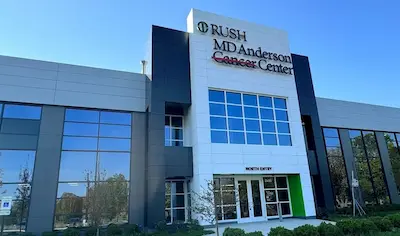
Spine tumor care is available at Rush University Medical Center in Chicago, Rush Copley Medical Center in Aurora, Rush Oak Brook and RUSH MD Anderson Cancer Center in Lisle.
No, you do not need a referral.
Yes. If you’ve been diagnosed with a spine tumor, Rush experts can confirm your diagnosis and help you understand your treatment options. Learn more about second opinions at Rush.

U.S. News & World Report ranked Rush University Medical Center among the best in the nation for cancer, orthopedics and neurology and neurosurgery care.