

The Approach to Lung Cancer Treatment at RUSH MD Anderson
As hope grows for people with lung cancer, experts at RUSH MD Anderson Cancer Center provide advanced treatments and compassionate, comprehensive care in and around Chicago.
Our program brings together a dedicated team of medical oncologists, thoracic surgeons, lung specialists, radiation oncologists and pharmacists, who all focus on lung cancer care. This means you can expect personalized care from a team that is committed to finding the most effective ways to treat your lung cancer. You’ll also have access to cancer support services, such as acupuncture, massage, counseling and medication management throughout treatment.
We offer some of the most advanced diagnostic tools, as well as innovative treatments like immunotherapy, precision medicine and minimally invasive surgery. We also strive to provide access to clinical trials that include some of the latest approaches to lung cancer care.
At RUSH MD Anderson, we treat more than just the cancer — we treat you as a whole person. That includes easing breathing issues, managing pain and side effects of cancer care, and supporting your quality of life during and after treatment.
Lung Cancer Program at Rush
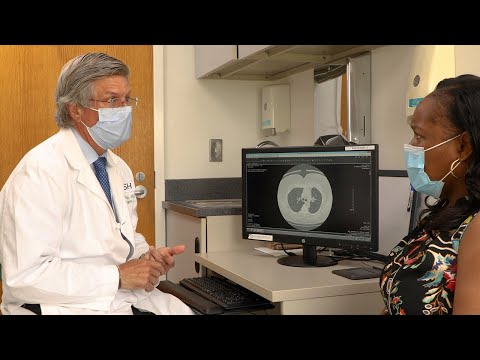
 Meet our lung cancer providers
Diagnosing Lung Cancer at RUSH MD Anderson
If your doctor suspects you may have lung cancer — because of symptoms, a screening or an unrelated scan — they may recommend a biopsy. This involves removing a small sample of lung tissue and examining it under a microscope to check for cancer cells.
Our team uses advanced tools, including robotic bronchoscopy and ultrasound-guided procedures, to diagnose lung cancer as early as possible. This gives us greater precision and ability to gather important information about your cancer, often with less discomfort.
Our lung cancer nurse coordinators will make sure any additional tests, such as MRIs or PET scans, are scheduled quickly, helping you move forward with your treatment plan.
Types of Lung Cancer
There are two main types of lung cancer: non-small cell and small cell.
- Non-small cell lung cancer is the most common type and is often treated based on its stage and specific genetic features. It makes up about 85% of lung cancer cases.
- Small cell lung cancer is a fast-growing cancer that is strongly linked to smoking. It’s usually treated with chemotherapy and immunotherapy, even in early stages.
We also treat rare types of cancer that can develop in the chest, including those that start in the thymus — a small gland in the upper chest — or in the lining around the lungs.
Biomarker Testing for Lung Cancer
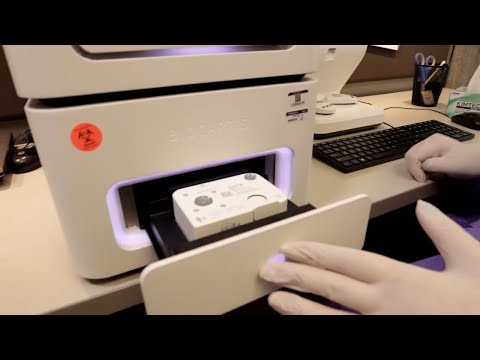
At RUSH MD Anderson, we offer biomarker testing after a lung cancer diagnosis to help understand what’s driving the cancer’s growth.
This testing looks for gene changes (called driver mutations) that may be treated with targeted therapies. We can test either a tumor sample or a blood sample, and the results help us choose the safest and most effective treatment plan. This testing is especially important for non-small cell lung cancer, since some mutations respond better to targeted therapy.
If you’ve been diagnosed with lung cancer, ask your doctor about the type of cancer you have and whether biomarker testing could help guide your treatment.
Biomarker Testing for Lung Cancer
Stages of Lung Cancer
Once lung cancer is diagnosed, your doctor will run more tests to determine its stage. Staging looks at the size of the tumor, whether it has spread to nearby lymph nodes and if it has traveled to other parts of your body.
Lung cancer is grouped into stages I through IV:
- Stage I means the cancer is small and only in one area of the lung.
- Stage II and stage III mean it’s either larger in size or has spread to nearby lymph nodes.
- Stage IV means it has spread to other parts of the body, like the other lung or bones.
After your cancer has been staged, your physician will explain how it applies to your treatment and how it affects your prognosis.
Preparing for Lung Cancer Treatment
Before you start treatment for lung cancer, there are steps you can take to manage side effects along the way. They include:
- Stopping smoking. Quitting even a few weeks before surgery can improve your breathing, speed up recovery and lower the risk of complications.
- Staying active. Gentle movement before treatment can help build strength and endurance, making recovery easier.
- Managing other health conditions. Keeping conditions like diabetes, heart disease or high blood pressure under control can support better outcomes.
- Knowing what to expect after surgery. Most lung surgeries at RUSH MD Anderson use minimally invasive techniques, so you may go home within a day or two. After surgery, you’ll want to move around, take deep breaths and use a breathing tool to help your lungs heal — and avoid heavy lifting for a few weeks.
- Understanding possible side effects. Chemotherapy, radiation, immunotherapy and targeted therapy can cause side effects like fatigue, coughing, trouble swallowing or memory changes. The good news: newer treatments are helping reduce these symptoms — even for people with later-stage lung cancer. Because these therapies work in different ways, they can sometimes cause new or unexpected side effects. That’s why it’s important to understand what to expect — and to talk with your doctor about ways to manage any side effects.
Common Nonsurgical Treatments for Lung Cancer
- Chemotherapy that damages cancer DNA and its building blocks
- Radiation therapy, high energy beams, which precisely focus on the areas of cancer. Some radiation treatments may last several weeks, while others require only a few sessions.
- Immunotherapies, therapies that are used to wake back up a person’s own immune system to help destroy cancer cells, and in certain circumstances, can work better than chemotherapy.
- Targeted therapies, oral or intravenous proteins that block certain survival signals that lung cancers might have and that are driving the growth of the cancer. A common example is an Epidermal Growth Factor Receptor inhibitor that is used if you have a gene mutation causing growth through the EGFR signaling pathway.
- Complementary and alternative therapies, including acupuncture, massage therapy and counseling, to accompany your medical treatment plan
- Photodynamic therapy, which uses a light-activated drug that destroys cancer cells. Your team may recommend photodynamic therapy when a typical treatment program is not appropriate for you. It can also help relieve symptoms if you have non-small cell lung cancer that obstructs your airways.
Surgical Treatments for Lung Cancer
- Lobectomy is the surgical removal of a section of the lung, known as a lobe.
- Lung resection is a surgery that only removes the mass in the lung and some of the surrounding tissue.
- Pneumonectomy is the surgical removal of one entire lung.
Minimally Invasive Lung Cancer Surgery
- NanoKnife is a treatment that uses short electrical pulses to destroy cancer cells.
- Video-assisted thoracoscopic surgery is used for almost 75% of lobectomies (lung removal) surgeries, which help you recover quickly. The average hospital stay afterward is 4.2 days, nearly half the national average, and you will experience less pain and a quicker return to your daily activities.
After your treatment, your provider will offer rehabilitative services, including physical therapy, occupational therapy and speech therapy to help you regain your function and strength.
Support Services for Lung Cancer
At RUSH MD Anderson, we offer supportive care for anyone going through lung cancer — including young adults and parents. Services include nutrition guidance, help with exercise and mobility, massage, acupuncture and emotional support.
Our psychologists and social workers can help you manage stress, talk with your family or plan ahead. We also refer to palliative care specialists who focus on pain and symptom relief during treatment.
Second Opinion Services for Lung Cancer
Have you been diagnosed with cancer? Consider a second opinion from RUSH MD Anderson. A second opinion can help you explore all your options and begin treatment with confidence and clarity.
RUSH MD Anderson offers easy access to second opinions, including free virtual intake visits with our knowledgeable nurse navigators for anyone in Illinois.
Excellence in Lung Cancer Care
- Screening to detect lung cancer early: If you have a high risk of developing lung cancer, lung cancer screening — available at all three hospitals — helps detect lung cancers in their earliest stages, when they are most treatable. Our lung cancer screening sites are designated screening centers of excellence by the Go2Foundation for Lung Cancer — a designation given to centers that meet the highest standards for lung cancer screening.
- Diagnosing lung care faster, more accurately: Experts at RUSH MD Anderson use a robotic-assisted bronchoscopy system to diagnose lung cancer faster and with more accuracy. This minimally invasive lung biopsy reaches more parts of the lung than a standard biopsy, so you get treated sooner.
- A leader in precision medicine: The lung cancer team works closely with Tempus — a biotechnology company that analyzes your specific genetic and clinical data and provides information about how your specific cancer may respond to targeted treatments. This allows your care team to tailor treatment to find the most effective option for treating your specific cancer.
- National leaders in lung cancer surgery: Your lung cancer treatment may include surgery. And you're in good hands. The Society of Thoracic Surgeons has designated thoracic surgery at Rush as a three-star program — the society’s highest rating — for lung cancer surgeries. It’s one of 13 thoracic surgery programs in the nation that has earned the three-star distinction, which denotes an excellent program with better-than-expected outcomes for patients.
- Internationally recognized for excellence in patient care: Your care team, lead often by national thought leaders in thoracic oncology, will put you at the center of every decision about your treatment. This patient-centered approach led the International Association for the Study of Lung Cancer to name Rush’s lung cancer program as one of five worldwide recipients of the foundation’s inaugural Cancer Care Team Award, which recognizes programs that provide the highest quality patient care.
Frequently Asked Questions About Lung Cancer
Most people with lung cancer do not experience any symptoms until the cancer has spread, which is why screening is so important if you’re at high risk. The symptoms that eventually appear also frequently result from conditions other than cancer, so there is no guarantee that these symptoms are a sign of lung cancer. Symptoms can include a persistent cough that worsens and may or may not produce blood, constant chest pain, shortness of breath and unexplained weight or appetite loss. And while more people who have never smoked are being diagnosed with lung cancer, screening CT scans remain the best way to find cancer early and save lives in those who qualify.
When doctors suspect lung cancer — whether due to symptoms, a screening or an unrelated scan — they may recommend a biopsy. This involves removing a small sample of lung tissue to check for cancer cells under a microscope.
Our team will work with you to use the best tools to get as much information as we need about your cancer — whether that be bronchoscopy based robotic/ultrasound, CT guided biopsy or a minimally invasive surgery.
We offer biomarker testing after a lung cancer diagnosis to help understand what’s driving the cancer’s growth. This testing looks for gene changes (called driver mutations) that may be treated with targeted therapies. We can test either a tumor sample or a blood sample, and the results help us choose the safest and most effective treatment plan and look for information on how a cancer is hiding from the immune system.
This kind of testing is especially important for non-small cell lung cancer, since some mutations respond better to targeted therapy than immunotherapy. If you’ve been diagnosed with lung cancer, it’s important to ask your doctor about getting tested.
The most common type of lung cancer, non-small cell lung cancer, does not grow or spread as quickly as small cell lung cancer, which is almost always caused by cigarette smoking.
The exact rate at which lung cancer will spread varies from person to person. It is best to rely on your physician to run tests and monitor the spread of cancer to determine how fast it is spreading.
The most recommended treatments for lung cancer depend on the type and stage of the cancer.
For non-small cell lung cancer that hasn’t spread, your physician will likely suggest surgery and radiation therapy for treatment. Our team will work with you to find the best strategy that may include chemotherapy and immunotherapy before or after surgery or radiation.
For small-cell lung cancer, chemotherapy is the treatment most often recommended because the medicine circulates throughout the body and can kill lung cancer cells that may have spread. Physicians often use radiation therapy with chemotherapy in these cases when the tumor stays in the lung and chest area and adding immunotherapy.
Your physician will work with you to provide the best treatment options for your specific case.
The effectiveness of lung cancer treatment varies widely for each person. In some instances, treatment can completely remove or destroy cancer. This is more common when treatment begins in early stages before the cancer has spread. However, there is still a chance that the cancer could come back.
In other cases, lung cancer cannot be “cured,” and patients may be recommended a prolonged course of targeted or immunotherapy-based treatment with the goal of putting the cancer into remission long term.
To find out how treatable your lung cancer is, you’ll need to rely on the advice of your physician. They can explain the treatment options available to you and monitor how effective they are.
It can depend on many factors, including when your lung cancer is found, how it responds to treatment and your overall health. When lung cancer is caught early and hasn’t spread, five-year survival rates can be as high as 64%. And with advances in treatment and earlier detection, more people are living longer after a lung cancer diagnosis.
The time it takes to recover from lung cancer surgery depends on factors that are unique to each case. These include the type of surgery, the overall health of the patient and whether there are complications.
For a major operation, such as a pneumonectomy, recovery time can take a few weeks to a few months. However, for minimally invasive surgery, recovery time can be much quicker.

U.S. News & World Report ranked Rush University Medical Center among the best in the nation for cancer and pulmonology and lung surgery care.