

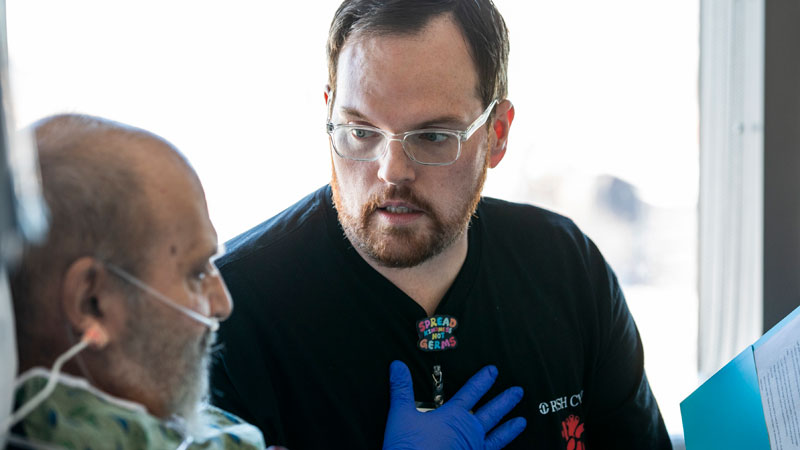
Preparing patients for heart surgery involves providing clear expectations, reassurance and practical guidance for recovery. On the Rush cardioscience intensive care unit, or CSICU, nurses recognized that education for patients scheduled for coronary artery bypass graft, or CABG, surgery was not standardized, leading to uncertainty for patients and families once recovery began.
To address this need, a multidisciplinary nursing team launched Heart Steps, a standardized preoperative education program designed to improve understanding, reduce anxiety and support smoother recovery for CABG patients.
More than 7,000 cardiac patients are treated at the medical center each year. Before this project, there was no consistent process to guide patients through their post‑surgical journey. Evidence shows that when patients understand what to expect, they are better prepared to participate in their recovery and may experience fewer complications and delays.
Using evidence from the nursing and medical literature, the team confirmed strong support for structured preoperative education. Research demonstrated that patients who receive education before CABG surgery experience lower anxiety, more stable physical responses, and, in some cases, shorter intensive care stays. These findings reinforced the importance of a consistent, patient‑centered approach.
Over 12 months, the team designed and implemented Heart Steps, which included the following elements:
- Three patient-friendly educational tools were created, including a recovery timeline and visual explanations of key terms and milestones.
- Education champions were trained to deliver and reinforce the materials, ensuring patients received consistent messaging.
- In collaboration with the cardiovascular surgery team, an electronic health record process was developed to identify patients who need education and to prompt timely teaching.
The program was piloted and evaluated using length‑of‑stay data across four CABG‑related diagnosis groups. While the overall average length of stay showed mixed results, three of the four diagnosis groups demonstrated improvement. Patients also reported greater satisfaction and a clearer understanding of their surgical journey.
As a result of this work, standardized preoperative education is now part of routine care for all surgical patients on the unit. The materials are being sustained and expanded, with plans to make them available through the patient portal to improve access and continuity.
Heart Steps highlights how frontline nurses used evidence, collaboration and patient‑focused design to strengthen care delivery. By meeting patients where they are — before surgery even begins — the team helped create a clearer path to recovery. This reinforced the role of nursing leadership in improving outcomes and experience.